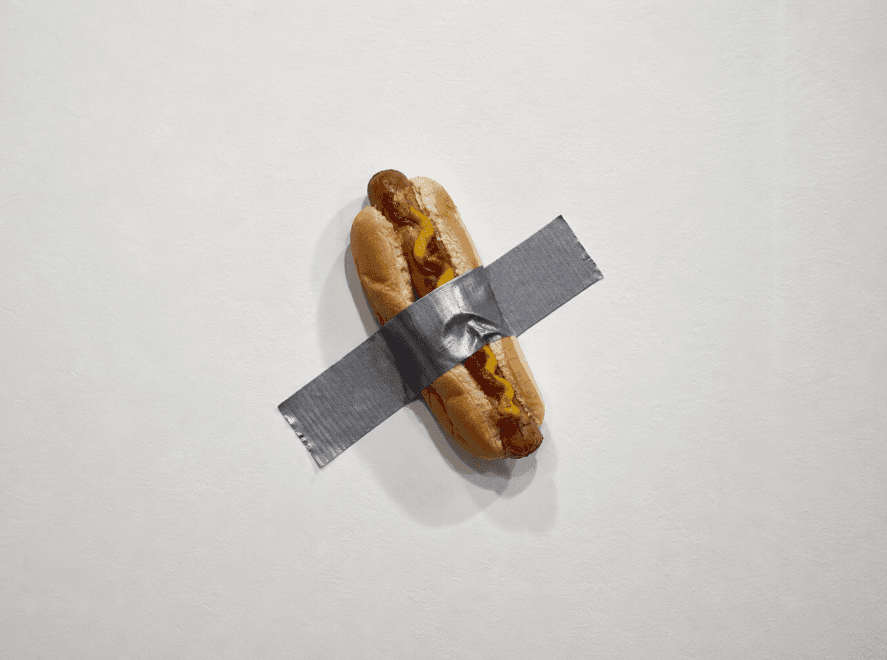
A major debate is once again taking place regarding what people value. The subject of this news is "Hotdog Tape Wall," a work consisting of a day old hotdog secured to a white wall with tape over it. The artwork by an anonymous American artist, is a phenomenon and had its debut in 2026, October 20th. This art piece. sparked debate whether it was a joke or cheeky commentary on questionable standards among art collectors. After fierce bidding from multiple collectors, it was ultimately sold for approximately $865,200 USD.
The artwork itself is extremely simple. A casual, hotdog is simply placed diagonally near the center of the frame, without a head or complex decorations. The hotdog doesn't even have a brand name, and it's made to look as much like an "ordinary hotdog" as much as possible. According to the artist, the theme of the work is the question, "What would happen if you put the most unnatural price on something that humans need most?" The moment food, something familiar to everyone, is placed in the exhibition space, it becomes a high six figure artwork.
Bidding started at US $400K and within minutes shot up to US $600K , then US $750K, then US $865K, as the auctioneer joked, "It's slipping through the auction room"
How many more time's will these artists get away with these pieces?
Although modern art can sometimes appear to consist of nothing more than simple lines or ordinary objects, its value often comes from the ideas, reputation, cultural context, and market forces surrounding it. However, the growing popularity of these works also raises questions about whether the art world values creativity itself or the status associated with owning a piece of art.
What separates an ordinary object from a valuable piece of art? A hotdog taped to a wall, a few random lines on a canvas, or a blank-looking painting might seem insignificant to the average person. Yet, in the modern art world, works like these can attract international attention and sell for extraordinary amounts of money. The explanation is not always found in the materials used or the technical skill required to create them. Instead, the value may lie in the idea itself. By challenging traditional expectations and changing how people perceive everyday objects, conceptual artists demonstrate that art can be as much about thought and interpretation as it is about physical creation.